
Estadio Azteca: World Cup 2026 Opening Match Venue
 Available in US
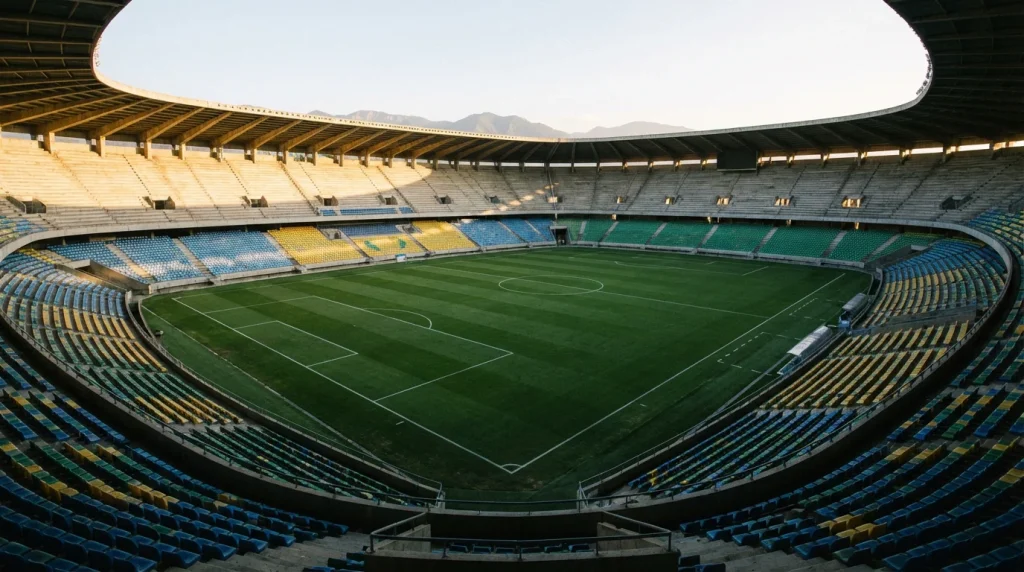
No stadium on earth has a deeper relationship with the World Cup than Estadio Azteca. When Mexico vs South Africa kicks off the 2026 tournament on 11 June, Estadio Azteca becomes the first and only venue in history to host World Cup matches across three separate tournaments — 1970, 1986 and now 2026. I have walked through the tunnel at the Azteca during a Liga MX match and felt the accumulated weight of what has happened on that pitch. Maradona’s Hand of God. Pelé’s third World Cup triumph. Carlos Alberto’s goal against Italy in the 1970 final. This is not just a stadium — it is football’s most storied theatre.
The 2026 World Cup opening match at Estadio Azteca carries a significance that goes beyond the fixture itself. FIFA chose this venue for the opener deliberately, honouring Mexico’s footballing heritage and the Azteca’s unique place in the sport’s history. For anyone following the World Cup from Ireland, understanding what makes this stadium special adds a layer of appreciation to the opening ceremony and first kick-off on 11 June.
A Stadium Like No Other: The Azteca Story
There is a moment during every major match at Estadio Azteca when the crowd produces a noise that I can only describe as geological — a deep, rolling wave of sound that seems to come from the ground itself rather than from human throats. I experienced it during a Club America match in the stadium, and the memory has stayed with me for years. The Azteca was built to produce that effect, and six decades later, it still delivers.
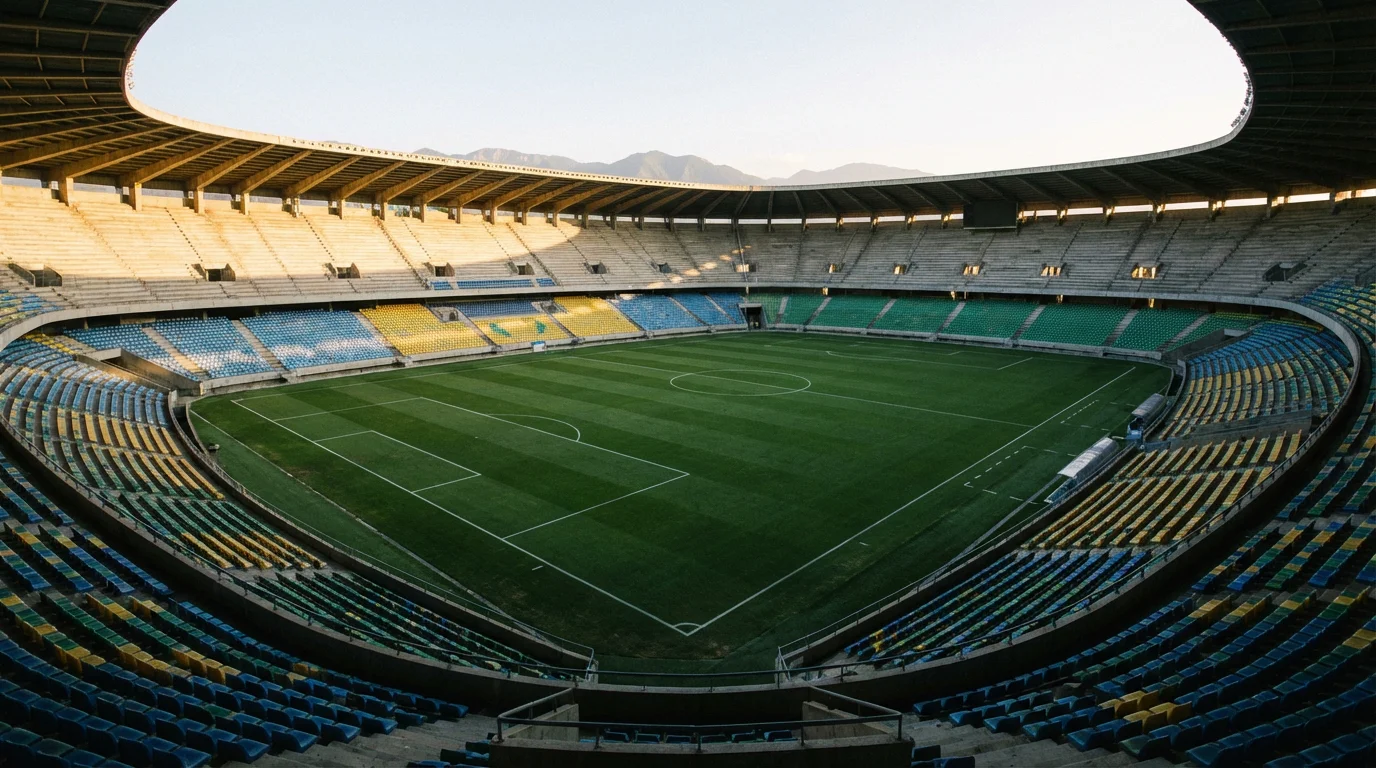
Estadio Azteca opened in 1966, two years after construction began, and was designed by architects Pedro Ramírez Vázquez and Rafael Mijares Alcérreca specifically to host the 1970 World Cup. The original capacity was 115,000 — a staggering number that made it the largest football stadium in the Americas at the time. The design philosophy was influenced by the ancient Aztec amphitheatres of central Mexico, with steep, tiered seating that creates an enclosed bowl effect and focuses the crowd’s energy downward toward the pitch. The result is an acoustic environment that amplifies atmosphere far beyond what the raw numbers of spectators would suggest.
The 1970 World Cup at the Azteca produced some of the most iconic moments in football history. Brazil’s 4-1 victory over Italy in the final, widely regarded as the greatest World Cup Final performance ever, took place on this pitch. Pelé completed his hat-trick of World Cup victories here. The tournament itself — the first to be broadcast in colour worldwide — established the Azteca as football’s grand stage. Sixteen years later, the 1986 World Cup returned to Mexico (originally awarded to Colombia, which withdrew), and Estadio Azteca hosted both the quarter-final in which Maradona scored the Hand of God and the Goal of the Century against England, and the final in which Argentina beat West Germany 3-2. Those two matches, played within the space of nine days, cemented the Azteca’s reputation as the most historically significant football venue on the planet.
The stadium has undergone significant renovations since the 1986 tournament. The capacity was reduced to approximately 87,000 through the installation of individual seating (replacing the original concrete terracing), structural reinforcement following the devastating 1985 Mexico City earthquake, and modernisation of facilities to meet contemporary safety standards. For the 2026 World Cup, the capacity will be further configured to around 83,000 to accommodate FIFA’s operational requirements — media facilities, hospitality areas and expanded concourses. Even at this reduced capacity, Estadio Azteca remains one of the largest and most atmospheric football venues on earth.
The pitch sits at an altitude of 2,240 metres above sea level — a factor that has affected every major match played here. The thin air at altitude reduces oxygen availability, meaning players fatigue faster and the ball behaves differently in flight, travelling further and dipping later than at sea-level venues. Teams accustomed to playing at altitude — Mexico, most South American sides — have a genuine physiological advantage at the Azteca. European and African teams that prepare at sea level often struggle in the opening 20 minutes as their bodies adjust. For the opening match on 11 June, the altitude factor will benefit Mexico significantly, and any betting analysis of fixtures at Estadio Azteca must account for this environmental variable.
World Cup 2026 Matches at Estadio Azteca
When FIFA announced the venue assignments for the 2026 World Cup, the decision to give Estadio Azteca the opening match was met with near-universal approval. The tournament begins here on 11 June with Mexico vs South Africa — the host nation’s first match on the world’s most historic World Cup stage. Beyond the opener, the Azteca hosts several group stage fixtures that reflect its status as one of the premier venues in the tournament.
| Date | Match / Round | Kick-Off (IST) |
|---|---|---|
| 11 June (Wed) | Opening Match: Mexico vs South Africa | 23:00 |
| 15 June (Sun) | Group A match | TBC |
| 20 June (Fri) | Group A match | TBC |
| 29 June (Sun) | Round of 32 match | TBC |
The opening match kicks off at 17:00 local time in Mexico City, which converts to 23:00 IST — a reasonable time for Irish viewers who want to watch the first ball kicked at the 2026 World Cup. The ceremony preceding the match will likely begin 60-90 minutes earlier, meaning the full opening experience starts around 21:30 IST. Set aside the evening of 11 June — this is one of those sporting occasions that justifies staying up for, regardless of whether you have a particular interest in Mexico or South Africa.
The Azteca also hosts a Round of 32 match on 29 June, which means the venue’s tournament involvement extends beyond the group stage. For teams drawn to play at the Azteca, the altitude factor becomes even more significant in a knockout context — a team that has spent two weeks acclimatising at sea-level venues in the United States will struggle physically against an opponent who played their group stage at altitude in Mexico.
From a betting perspective, the altitude advantage for Mexico in the opening match is one of the most underpriced factors at the 2026 World Cup. Mexico at home, at altitude, in the opening match of a World Cup they are co-hosting, with the emotional weight of Estadio Azteca’s history behind them — that is a formidable combination. I would look at Mexico to win the opening match at whatever price the market offers, and I would factor altitude into every fixture played at the Azteca throughout the tournament.
Atmosphere and Character
You can read about Estadio Azteca’s atmosphere in a hundred articles, but none of them prepare you for the reality. I have been in stadiums across Europe, South America and North America, and the Azteca’s matchday experience is distinct from all of them. The sound is different — deeper, more rhythmic, driven by drums and coordinated chanting that builds throughout the match rather than peaking and fading. The visual spectacle is different too, with vast tifos, confetti showers and a colour palette dominated by Mexico’s green that covers the stadium from the lowest tier to the upper reaches.
The crowd at Estadio Azteca is composed almost entirely of passionate, knowledgeable Mexican football fans who have grown up attending matches at this venue. The generational connection is important — a fan who attended the 1986 World Cup as a teenager now brings their grandchildren to Liga MX matches at the same stadium. That continuity creates an emotional depth that newer, purpose-built venues simply cannot replicate. When Mexico play at the Azteca, the crowd is not just supporting a team; they are participating in a tradition that stretches back to the 1960s.
The stadium’s design amplifies the atmosphere in ways that are architectural as much as cultural. The steep terracing creates a wall of sound that funnels toward the pitch, and the enclosed bowl shape prevents noise from escaping upward. At full capacity, the Azteca generates a sustained decibel level that rivals any venue in world football. The thin air at altitude does not reduce the volume — if anything, the atmospheric conditions seem to sharpen the acoustics, producing a clarity of sound that is unlike the muffled roar of sea-level stadiums.
For the 2026 World Cup opener, the atmosphere will be extraordinary. Mexico hosting a World Cup for the third time, in a stadium that has witnessed football’s greatest moments, with a crowd that understands the weight of the occasion — this is an opening ceremony that will set the tone for the entire tournament. I would rate Estadio Azteca’s atmosphere at 10/10 for the opening match specifically. Even if you have no interest in the Mexico vs South Africa fixture from a betting perspective, watching the opening ceremony and the first 15 minutes of the match is essential viewing for anyone who cares about football culture.
Mexico City Context
Mexico City is one of the world’s great metropolises — a sprawling, chaotic, culturally rich city of 22 million people that overwhelms first-time visitors and rewards those who take the time to explore. For Irish fans considering a trip to the World Cup opener, Mexico City offers an experience unlike anything available at the US or Canadian venues. The food alone — from street tacos at 3am to world-class restaurants in Polanco and Condesa — justifies the journey. The cost of living is significantly lower than in New York or Toronto, with mid-range hotel rooms available from around EUR 80-120 per night and excellent meals for EUR 10-15.
Estadio Azteca sits in the Coyoacán district in the southern part of the city, accessible via the Metro (Line 2 to Tasqueña, then a short taxi or bus ride) or by taxi and rideshare from central neighbourhoods. The journey from the historic centre or from Condesa and Roma — the neighbourhoods where most tourists stay — takes 30-45 minutes depending on traffic, which in Mexico City is perpetually heavy. On match days, dedicated transport services and road closures will ease access to the stadium, but plan for delays and arrive at least 90 minutes before kick-off.
The altitude of Mexico City — 2,240 metres — affects visitors as well as players. Irish tourists arriving from sea level should expect mild altitude symptoms during the first 24-48 hours: shortness of breath, headache, fatigue and occasionally nausea. These symptoms are manageable and pass quickly, but it is worth arriving a day or two before the match to acclimatise. Drinking plenty of water and avoiding excessive alcohol on the first day are standard recommendations. The altitude also means that sunburn is a risk even on cloudy days — the thinner atmosphere filters less UV radiation, so sun protection is essential for anyone attending a daytime or late-afternoon match at the Azteca.
Mexico City’s cultural offerings provide context for a World Cup trip that goes far beyond football. The Museo Nacional de Antropología, the Frida Kahlo Museum in Coyoacán (conveniently close to the Azteca), Chapultepec Park, the Zócalo and the Templo Mayor archaeological site are all within easy reach. The combination of World Cup football and Mexico City’s cultural depth makes the opening match one of the most attractive single-trip experiences available at the 2026 tournament. For Irish fans who want to combine the World Cup with a genuine travel experience rather than a hotel-to-stadium shuttle, Mexico City is the standout destination.
