
World Cup Betting Glossary: Every Term Explained
 Available in US
I started covering football betting markets nine years ago, and the single biggest barrier I saw for new punters was not the maths — it was the language. Betting has its own vocabulary, and much of it is deliberately obscure, inherited from decades of bookmaking tradition that was never designed to be transparent. This World Cup betting glossary is my attempt to fix that. Every term you will encounter during the 2026 World Cup, defined in plain language with examples in fractional odds — because that is what Irish bookmakers use, and that is what matters if you are placing bets from Dublin, Cork or anywhere else on this island.
I have organised the terms alphabetically, added my own commentary where I think it helps, and included a section on Irish and British punting slang at the end — the informal language that you will hear in bookmakers’ shops and pubs but rarely see defined anywhere. If you are new to World Cup betting, start here and come back whenever you encounter a term you do not recognise.
A-F
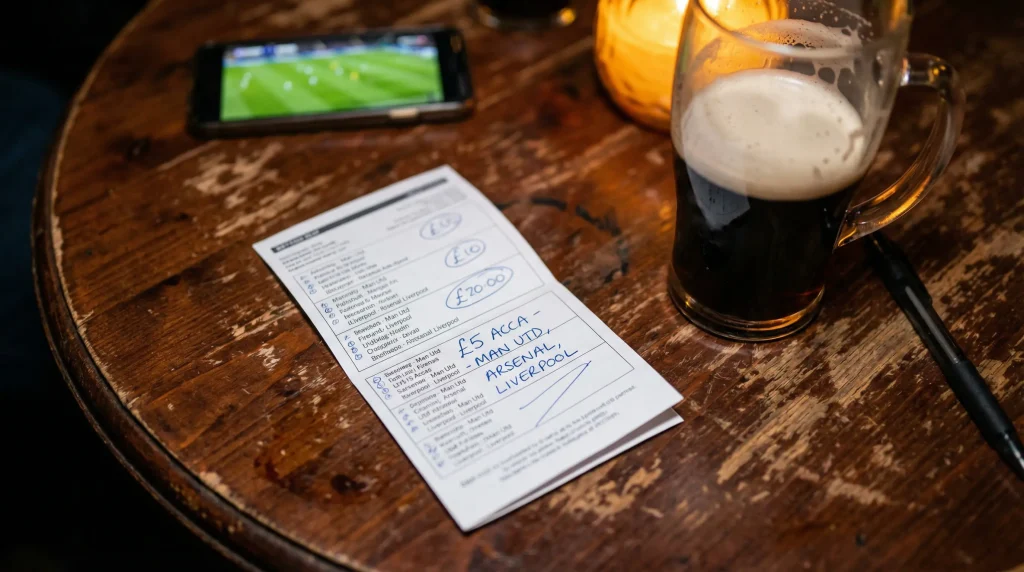
Right, let me start with an admission: the first time someone explained accumulators to me, I thought they were describing a Ponzi scheme. Five selections, one stake, all must win, returns compound through each leg — it sounded too good to be true. That is because, for the bookmaker, it usually is. Accumulators are the single most profitable product bookmakers sell. Understanding why is the first step toward using them wisely.
Accumulator (Acca): A single bet combining multiple selections where all must win for the bet to pay out. Each winning selection’s returns roll into the next. A four-fold acca on World Cup group winners at 2/1, 5/4, 3/1 and 6/4 would return a combined payout calculated by multiplying the odds together. The appeal is obvious — small stakes produce large potential returns. The catch is that the bookmaker’s margin compounds with every leg, making long accas mathematically punishing over time. I use accas sparingly and never with more than four legs.
Added Time (Injury Time, Stoppage Time): Extra minutes added at the end of each half to compensate for stoppages. Most World Cup betting markets settle on the result after 90 minutes plus added time, but before extra time in knockout matches.
Ante-Post: A bet placed well before an event. Backing Brazil to win the 2026 World Cup six months before the tournament is an ante-post bet. Ante-post odds are typically more generous because you are accepting the risk that a team might withdraw, a key player might get injured, or circumstances might change before the event starts.
Asian Handicap: A handicap system that eliminates the draw outcome by applying fractional goal advantages. If Argentina are -1.5 against Jordan, they must win by two or more goals for the bet to land. If the handicap is -1.0 and Argentina win by exactly one goal, the stake is refunded (a “push”). Asian handicaps are popular among serious bettors because they reduce the bookmaker’s margin compared to traditional three-way markets.
Banker: A selection considered almost certain to win, used as a foundation for accumulators. England beating Panama in Group L at around 1/8 would be a typical banker. The problem with bankers is that they are priced accordingly — when they lose (and they do lose), the entire acca collapses.
Bet Builder: A single bet combining multiple selections within the same match. Backing Argentina to win, over 2.5 goals and a specific player to score, all in one bet, is a bet builder. Bookmakers love these because the combined margin is higher than individual singles, and the correlation between selections is often mispriced. I use bet builders cautiously and only when I can identify a genuine correlation the market has not accounted for.
Both Teams to Score (BTTS): A market that pays out if both teams score at least one goal, regardless of the final result. At the World Cup, BTTS has historically landed in approximately 48% of group stage matches — close enough to a coin flip that the market is genuinely interesting for bettors who can identify fixtures where both sides are likely to attack.
Cash Out: An option to settle a bet before the event finishes, locking in a profit or limiting a loss. Bookmakers offer cash-out values that include their margin — the price you are offered is always worse than the true value of your position. I almost never cash out.
Correct Score: A bet on the exact final scoreline. Correct score bets carry high odds because the probability of any single scoreline is low, but the bookmaker’s margin on these markets is among the highest of any bet type. Treat these as entertainment, not strategy.
Double: An accumulator with exactly two selections. Both must win for the bet to pay out. A double on Brazil to win Group C and Argentina to win Group J is a straightforward example.
Double Chance: A market covering two of the three possible match outcomes. Home/Draw, Away/Draw or Home/Away. Backing Morocco Double Chance (win or draw) against Brazil in Group C covers two of the three possible results, reducing risk at the cost of lower odds.
Draw No Bet (DNB): A market where your stake is refunded if the match ends in a draw. You only win if your selected team wins, and you only lose if they lose. DNB is popular for matches where you favour one side but want protection against the draw. The odds are lower than the straight win market — the draw protection has a cost.
Drifting: When odds lengthen (move against the selection). If Brazil’s outright World Cup odds move from 4/1 to 5/1, they are drifting. Drifting usually indicates that money is moving away from a selection, often due to team news, injury concerns or market sentiment.
Each-Way: A bet that consists of two parts: one on the selection to win and one on the selection to place (finish in a specified position range). In outright World Cup betting, each-way terms typically pay 1/4 or 1/5 of the win odds for a top-two or top-four finish. Each-way betting is one of the most valuable tools in a World Cup punter’s toolkit — backing a dark horse each-way at 25/1 means you collect on the place portion if they reach the semi-finals or final, even if they do not win the tournament.
Expected Goals (xG): A statistical model that assigns a probability to each shot based on historical data — position, angle, defensive pressure, body part used. An xG of 0.35 means that shot would be scored 35% of the time based on similar historical attempts. xG has become central to modern football analysis and increasingly influences betting markets.
First Goalscorer: A bet on which player scores the first goal in a match. If your selected player does not start, most bookmakers refund the stake. First goalscorer markets carry high margins but are popular for entertainment value.
Fixed Odds: Odds that are guaranteed at the time of placing the bet, regardless of how the market moves afterwards. If you back France at 6/1 to win the World Cup and the odds shorten to 4/1, your bet still pays at 6/1. Most betting in Ireland operates on fixed odds.
Fold: Refers to the number of selections in an accumulator. A four-fold has four selections, a six-fold has six. Each additional fold compounds both the potential payout and the bookmaker’s margin.
Fractional Odds: The traditional odds format used in Ireland and the UK. Odds of 5/1 mean you win five units for every one unit staked, plus your original stake back. Odds of 1/2 mean you win one unit for every two staked. Fractional odds are intuitive once you understand the notation: the number on the left is your potential profit, the number on the right is your stake.
G-O
A friend once asked me to explain the difference between a handicap and an Asian handicap. Twenty minutes later, he understood less than when he started. I will try to do better here. The goal market terminology alone at a World Cup can fill a page, and knowing the difference between over/under and Asian lines saves real money over the course of a tournament.
Group Winner: A bet on which team finishes first in their World Cup group. This is distinct from “to qualify” — a team can qualify in second or third place and still lose a group winner bet.
Handicap: An artificial advantage or disadvantage applied to a team to create a more balanced betting market. A -1 handicap on Brazil means they start the match with a one-goal deficit for betting purposes. If Brazil win 2-0, the handicap result is 1-0 to Brazil. If Brazil win 1-0, the handicap result is a draw.
Half-Time/Full-Time: A bet on the result at both half-time and full-time. Backing Draw/Home means the match is level at half-time and the home team wins at full-time. This market carries high odds because you are predicting two outcomes, but the margins are correspondingly large.
In-Play (Live Betting): Bets placed after a match has kicked off. Odds fluctuate in real time based on what is happening on the pitch. In-play betting at the World Cup is enormous — the volume of in-play wagers during a World Cup knockout match dwarfs the pre-match market. The key risk is that odds move faster than your analysis, and emotional decisions during live matches are the most expensive mistakes a punter can make.
Lay: Betting against an outcome — essentially acting as the bookmaker. If you lay Brazil to win the World Cup, you win if any other team lifts the trophy. Laying is primarily associated with betting exchanges rather than traditional bookmakers.
Line (Spread): The point at which a handicap or total goals market is set. A total goals line of 2.5 means over 2.5 pays if there are three or more goals, and under 2.5 pays if there are two or fewer.
Match Result (1X2): The most basic betting market — home win (1), draw (X) or away win (2). At the World Cup, where there is no home team in the traditional sense, the “home” side is listed first in the fixture.
Nap: A tipster’s strongest selection of the day. The term comes from the card game Napoleon. If a punter says their “nap” for 19 June is Scotland to beat Haiti, that is their most confident pick.
Odds-On: Odds shorter than evens (1/1). At odds of 1/3, you risk three units to win one. Odds-on selections are expected to win more often than not, but the returns are small relative to the stake.
Outright: A bet on the overall outcome of a tournament rather than an individual match. Backing Argentina to win the 2026 World Cup at 3/1 is an outright bet. Outright markets open months before the tournament and the odds move continuously based on injuries, form and market sentiment.
Over/Under: A market based on whether a specific statistic — usually total goals — finishes above or below a set line. Over 2.5 goals in England vs Croatia means you need three or more goals. Under 2.5 means two or fewer. The .5 eliminates the possibility of a push (draw).
P-Z
I once lost a bet because I did not understand the difference between “90 minutes” and “to lift the trophy” in a knockout match. That mistake cost me a decent return and taught me a lesson I have never forgotten: in World Cup betting, the exact terms of your bet matter as much as the selection itself. The terms below cover the markets and concepts that trip up even experienced punters during knockout rounds.
Payout: The total amount returned on a winning bet, including the original stake. A EUR 10 bet at 5/1 produces a payout of EUR 60 (EUR 50 profit plus EUR 10 stake returned).
Place: In each-way betting, the place portion pays if the selection finishes within a specified range. For outright World Cup betting, “place” typically means finishing in the top two or top four, depending on the bookmaker’s terms.
Price: Another word for odds. “What price is Brazil?” means “What odds are Brazil being offered at?”
Push: When a bet is neither won nor lost, and the stake is returned. This occurs on whole-number Asian handicaps or total lines when the result lands exactly on the line.
Shortening: When odds decrease, moving in favour of the selection. If Morocco’s outright odds move from 20/1 to 14/1, they are shortening. Shortening indicates money coming in on a selection.
Single: A bet on one selection only. The simplest form of betting and mathematically the most favourable for the punter, because the bookmaker’s margin is applied only once rather than compounding across multiple legs.
Stake: The amount of money wagered on a bet. Responsible bankroll management for a World Cup tournament means allocating a fixed total stake and dividing it across the 39-day event. I recommend never placing more than 5% of your tournament bankroll on a single bet.
Steaming: When odds shorten rapidly due to heavy betting volume. A steamer is a selection attracting significant money. Steaming before a World Cup match often indicates insider information about team selection or formation changes.
Tip: A recommended bet from a punter or analyst. Tips should always include the odds at the time of recommendation, the reasoning behind the selection and the recommended stake level.
To Qualify: A bet on a team to progress to the next round, regardless of whether they finish first, second or third in their group. In the 48-team format, “to qualify” from the group includes the third-place route, making it a broader and more forgiving market than “group winner.”
Treble: An accumulator with exactly three selections. All three must win for the bet to pay out.
Value: A bet where the odds offered are higher than the true probability of the outcome. If I believe Scotland have a 40% chance of qualifying from Group C but the odds imply only 30%, that is value. Finding value consistently is the single most important skill in profitable betting — more important than picking winners, because winners at bad odds still lose money over time.
Void: A bet that is cancelled and the stake returned. Bets can be voided for various reasons: a player not starting in a first goalscorer market, a match abandoned, or specific terms in the bookmaker’s rules being triggered.
Yankee: A combination bet covering four selections in 11 bets: six doubles, four trebles and one four-fold accumulator. A Yankee requires a minimum of two winning selections to generate a return. The cost is 11 times the unit stake, making it an expensive bet that rewards punters who get three or four selections correct.
Irish and British Punting Slang
Every Saturday in every bookmaker’s shop across Ireland, you will hear a language that does not appear in any official glossary. This is the informal vocabulary of punting — the slang that has been passed down through generations of racegoers and football bettors. I am including it here because you will encounter it in pubs, on social media and in conversations during the World Cup, and understanding it makes the experience richer.
Acca: Short for accumulator. The most commonly used term in Irish and British betting culture. “My World Cup acca died in the third leg” is a sentence you will hear dozens of times during the tournament.
Bookie: Bookmaker. Universal in Ireland and the UK.
Docket: The physical slip or digital confirmation of a bet. “Check your docket” means verify the details of your bet.
Get on: To place a bet. “I need to get on Brazil before the odds shorten.”
Jolly: The favourite. “England are the jolly in Group L.”
Mug bet: A bet with no value, usually on a heavy favourite at short odds. Backing Argentina at 1/8 to win Group J would qualify.
On the nose: A bet on a selection to win outright, as opposed to each-way. “I had Scotland on the nose at 7/1 to win Group C.”
Punt: A bet. Also used as a verb: “I’ll punt on Morocco each-way.” In Ireland, “having a punt” carries a more casual connotation than “gambling” — it implies entertainment rather than addiction.
Rag: An outsider at long odds. Haiti at 150/1 to win the World Cup would be described as a rag.
Steamer: A selection whose odds are shortening rapidly due to heavy backing. “France are steaming — were 6/1 yesterday, 4/1 now.”
Touch: A winning bet. “I had a nice touch on the Croatia draw at 12/5.”
