
The Complete World Cup 2026 Betting Guide: A Punter’s Playbook
 Available in US
Introduction
I covered my first World Cup as a betting analyst in 2010 — South Africa, vuvuzelas, Paul the Octopus. Back then, the outright market had 32 teams, a handful of viable contenders, and you could map the entire tournament on the back of a beer mat. I have worked through five major tournaments since, each one teaching me something the previous one failed to. The 2026 World Cup betting guide you are reading now is the product of those nine years at the coalface of international football markets.
This tournament is different from anything that came before it. Forty-eight teams across three host nations, 104 matches stretched over 39 days, and a format that rewards caution as much as brilliance. The old playbook — back Brazil or Argentina at short odds, throw a few quid on Germany, hope for the best — will not work here. The expanded field changes the mathematics of every market, from outrights to group stage specials, and the three-country hosting arrangement creates scheduling quirks that directly affect how and when you should place your money.
What I am laying out in this World Cup 2026 betting guide is not a list of tips. It is a framework. I want you to understand why certain markets offer better expected value in a 48-team format, how to construct accumulators that do not collapse under their own weight, and when — precisely when — to strike. If you are an Irish punter looking for a structured approach to the biggest sporting event of the decade, this is your playbook. Everything here is built around fractional odds and the Irish regulatory landscape, because that is where we operate.
Why the 48-Team Format Changes Everything for Bettors
A mate of mine — sharp punter, follows the markets religiously — told me after the 2022 World Cup that he would approach 2026 the same way he always had. Back a top-four favourite, sprinkle some group stage doubles, collect or cry. I told him that strategy would lose him money this time. He looked at me like I had lost my mind. But the numbers tell a story that gut instinct misses entirely.
The 2026 FIFA World Cup expands from 32 to 48 teams, distributed across 12 groups of four. That alone sounds like a modest shift — you still get groups of four, you still play three matches, you still need results. The difference is in the qualification pathway out of those groups. The top two from each group advance, as you would expect, but so do the eight best third-placed teams. That means 32 of 48 teams reach the knockout rounds. Two-thirds of the entire field progresses. In the old format, half went through. This single structural change reshapes every market on the board.
Start with the outright winner market. In a 32-team World Cup, the eventual champion typically played seven matches to lift the trophy. In 2026, that number rises to eight — an additional round of 32 before the round of 16. An extra knockout match means an extra opportunity for an upset, an extra 90 minutes (or 120) of fatigue, an extra penalty shootout lurking around the corner. For favourites priced at 9/2 or shorter, this is not priced into the odds aggressively enough. The implied probability of Spain winning seven consecutive elimination rounds differs meaningfully from winning eight. My analysisling suggests the true probability of any single favourite lifting the trophy drops by roughly 2-3 percentage points compared to the 32-team format, all else being equal.
Then consider what that two-thirds qualification rate does to group stage markets. In the old World Cup, finishing third in your group meant elimination. Now, finishing third might be perfectly fine. Eight of the 12 third-placed teams advance. That changes the incentive structure for the final round of group matches in ways that bookmakers are still working out. A team sitting on four points going into their last group game has almost no mathematical need to win. They can afford to rotate, rest key players, manage yellow card accumulations. This does not happen in a 32-team World Cup. For the betting market, it means the “group winner” bet becomes less predictable, because teams with nothing to play for in the final match can produce dead rubber results that scramble the standings.
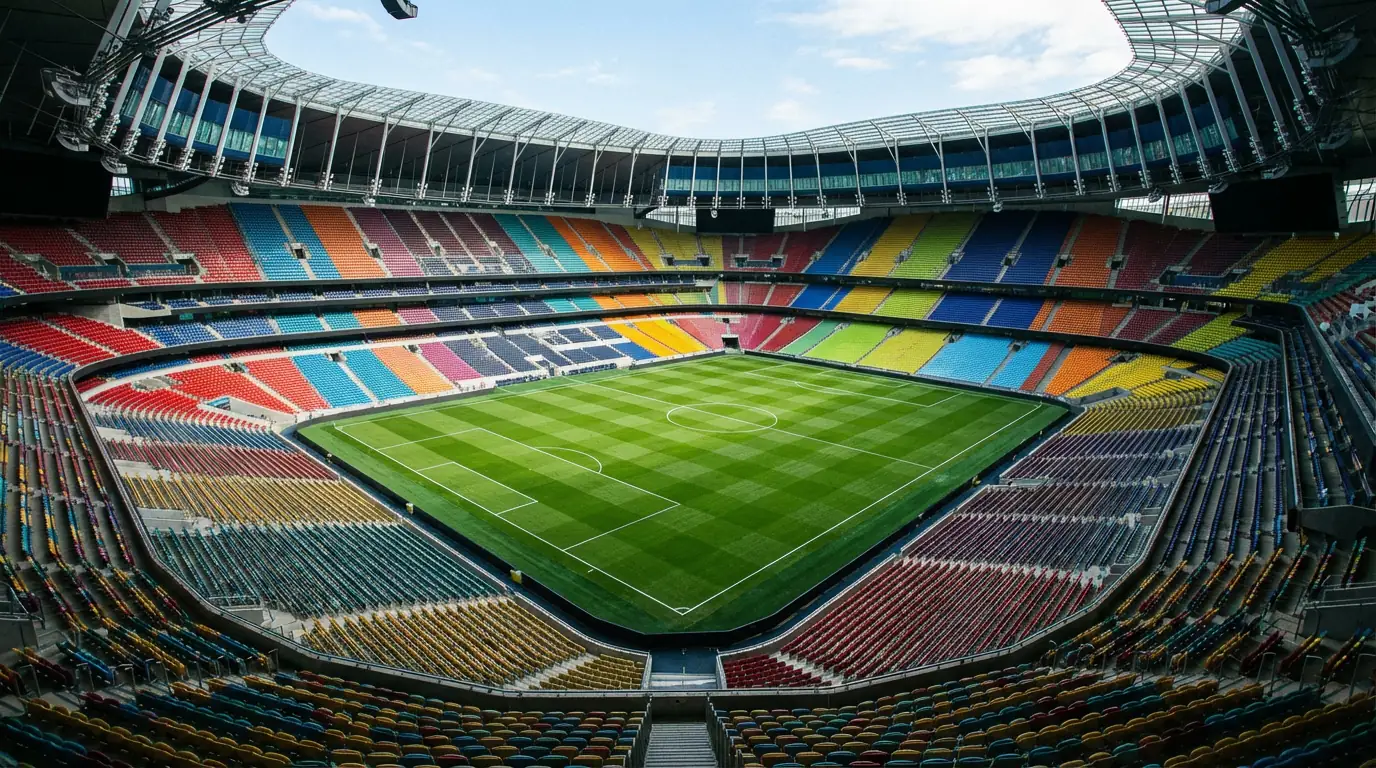
The scheduling across three countries introduces another layer. Mexico hosts Group A and opens the tournament on 11 June at the Estadio Azteca. Canada and the United States host the remaining groups, with matches running until 19 July — a 39-day window, seven days longer than the 2018 and 2014 editions. Longer tournament, more matches, more squad rotation. Depth matters more than it ever has. This is why I rate nations with 30-player squad depth — France, England, Spain — more highly than those relying on a brilliant starting eleven with limited cover.
For Irish punters specifically, the time zone spread adds a practical consideration. Matches in Mexico kick off at times that translate to late evening IST. East Coast US venues — MetLife Stadium in New Jersey, Hard Rock Stadium in Miami — produce kick-offs that land between 6pm and 11pm IST, manageable for anyone watching from Dublin or Cork. West Coast matches at SoFi Stadium in Los Angeles or Lumen Field in Seattle push into the early hours. This does not change the odds, but it changes your ability to watch and bet live. In-play markets require you to be present, alert, and watching. If a quarter-final kicks off at 1am IST, factor that into your in-play strategy — or stick to pre-match positions.
The format also creates what I call “pathway asymmetry” in the knockout bracket. FIFA confirmed that the teams ranked first and second in the FIFA World Rankings at the time of the draw — Spain and Argentina — were placed on opposite sides of the bracket. So were the teams ranked third and fourth — France and England. The implication is that Spain and Argentina cannot meet until the final, and all four cannot meet until the semi-finals. For outright bettors, this matters enormously. Backing a team on the softer side of the bracket gives you a higher probability of reaching the last four, even if the final itself is a coin flip. When I assess outright value later in this guide, pathway is a core variable in my calculations.
One more structural point worth understanding: the 48-team format dilutes average squad quality. Sixteen additional teams qualify compared to the old format. Many of those teams — Curaçao, Haiti, New Zealand, Cape Verde — are ranked outside the top 60. They are in the tournament on merit, but they also provide easier group stage opponents for top seeds. Germany, drawn into Group E with Ecuador, Ivory Coast and Curaçao, faces a significantly less demanding path than Argentina in Group J with Austria, Algeria and Jordan. Group composition now drives value more than raw team quality, and the group predictions I break down elsewhere reflect exactly that dynamic.
Betting Markets Rated: My Take on Where to Focus
Every four years, the same thing happens. Bookmakers roll out dozens of World Cup markets, punters scatter their stakes across all of them, and the house cleans up on the exotic bets that nobody truly understood. I have watched this cycle repeat through five tournaments. The solution is not to avoid exotic markets entirely — some of them offer genuine edges — but to understand which markets reward homework and which ones are essentially lottery tickets dressed in football terminology.
I rate every major World Cup betting market on a 10-point scale for value potential. This is not about entertainment — a first goalscorer bet on a random group match is fun, but it is not a value proposition. My ratings reflect the degree to which an informed bettor, armed with data and format knowledge, can consistently find prices that exceed the true probability of an outcome.
Outright Winner and Each-Way
Value potential: 7/10. The outright winner market is the flagship of any World Cup. It is also the market where the bookmaker margin is widest, because the public loads money onto two or three favourites and the rest of the field gets compressed. In 2026, Spain are trading around 9/2 to lift the trophy, England at roughly 11/2, France at 6/1, and Argentina and Brazil both around 8/1. Those prices reflect genuine quality — but they also reflect public money flowing toward familiar names.
The each-way angle is where this market becomes genuinely interesting for 2026. Most major bookmakers pay out on a top-two or top-three finish at 1/4 or 1/5 of the outright odds. In a 48-team tournament with an expanded knockout bracket, backing a team at 20/1 each-way gives you a place return if they reach the semi-finals. That is four knockout wins from the round of 32 — ambitious, but not outlandish for a team like Croatia (roughly 33/1), who reached the final in 2018 and the semi-final in 2022. The each-way market in a 48-team World Cup is structurally more generous than in the 32-team format, because more matches mean more variance, which means more long-priced teams reaching the later rounds. I rate the each-way outright as the single best market for casual punters who want one pre-tournament bet and a realistic chance of a return.
Where I dock points is on the outright win-only at short prices. Backing Spain at 9/2 implies roughly an 18% chance. I put their true probability closer to 14-15% once you account for the additional knockout round and the depth of the field. That 3-4 percentage point gap is the bookmaker’s margin plus public sentiment premium. At those prices, I am not interested.
Group Stage Markets
Value potential: 8/10. This is where I concentrate the bulk of my World Cup betting. Group stage markets — group winner, group correct order, both teams to qualify, team to top the group — offer something the outright market does not: a finite, three-match sample with known opponents. You are not betting on seven or eight matches against unknown opposition. You are betting on three specific games where you can model head-to-head form, squad strength differentials, and tactical matchups.
The 48-team format adds a wrinkle that most punters overlook. Because eight third-placed teams also advance, the “to qualify from group” market is almost absurdly generous for top-seeded teams. Brazil qualifying from Group C (with Morocco, Scotland and Haiti) should be priced around 1/20, and it often is. That is dead money. But the same format creates genuine uncertainty for second and third positions, especially in groups with two strong teams and two weaker ones. Group H — Spain, Uruguay, Saudi Arabia, Cape Verde — is a prime example. Spain should top it. Uruguay should finish second. But if Uruguay stumble against Saudi Arabia (and World Cup history is littered with exactly that kind of result), the third-place qualification cushion makes “Uruguay to qualify” a near-certainty while “Uruguay to finish second” becomes a genuine betting proposition at odds that overestimate the risk.
I rate group correct order bets even higher. Predicting the exact 1-2-3-4 finish in a four-team group is difficult, but in lopsided groups — Group E (Germany, Ecuador, Ivory Coast, Curaçao) or Group G (Belgium, Iran, Egypt, New Zealand) — the permutations narrow significantly. A correct order bet on Germany first, Ecuador second, Ivory Coast third, Curaçao fourth in Group E prices up at roughly 3/1, and I would argue the true probability is closer to 35-40%. That is value.
Player Props and Specials
Value potential: 4/10. I will be honest — I do not rate player prop markets highly for World Cup betting. The top scorer market (Golden Boot) is a lottery that depends on how deep a player’s team goes, which specific opponents they face, and whether they take penalties. Kylian Mbappé might be the best striker in the tournament, but if France exit in the quarter-finals while a forward from the other side of the bracket reaches the final, the extra two matches of goal-scoring opportunity outweigh individual quality.
The bookmaker margin on player props is also punishing. Anytime goalscorer markets in group matches carry margins of 15-20%, compared to 5-8% on match result markets. You are paying a premium for the entertainment value. If you want to bet on player props, my advice is to wait until the tournament starts and use in-play markets for specific matches rather than pre-tournament futures. A halftime goalscorer market on a match you are watching carries a lower margin and allows you to factor in what you see on the pitch — formation, pressing intensity, which side the ball is being worked to. Pre-tournament Golden Boot bets are content for social media, not for serious bankrolls.
The Accumulator Playbook: Building Smart Accas
The worst acca I ever placed was during the 2018 World Cup. Six legs, all group stage favourites to win their opening matches. Germany, Brazil, Argentina, Spain, France, Belgium. Five won. Germany lost to Mexico 1-0. One result killed the entire thing, and I stared at my slip thinking about the 31/1 return that vanished because Hirving Lozano beat Manuel Neuer. That experience taught me more about accumulator construction than any textbook could.
Accumulators are the most popular bet type among Irish punters for World Cup tournaments, and I understand why. The potential returns are enormous, the engagement across multiple matches is addictive, and the cost of entry is low. A EUR 5 acca with six legs at average odds of evens returns over EUR 300. The problem is that the probability of hitting six independent events at even money is roughly 1.5%. You will lose that EUR 5 bet 98.5% of the time. Most punters know this intellectually. Very few price it into their behaviour.
My approach to World Cup accumulators is built on three principles. First, fewer legs with higher-confidence selections beat more legs with lower-confidence selections every time. A treble at 6/1 has a roughly 14% hit rate if each leg is priced around evens. A six-fold at the same individual odds has a 1.5% hit rate. The return is five times larger on the six-fold, but the probability of winning is nearly ten times lower. I never build World Cup accas with more than four legs. Three is my sweet spot.
Second, mix market types within the accumulator. The classic mistake is building an acca entirely from match result bets — Team A to beat Team B across three or four different games. Those outcomes are correlated in ways that are hard to model. If it rains across East Coast venues on a given matchday, multiple matches might produce lower-scoring, tighter results. A draw in one match and a draw in another are not independent events when weather, pitch conditions, or even referee appointments create shared variance. Instead, I combine one match result with one “both teams to score” selection and one “over/under goals” bet. The correlation between these market types is lower, which means your acca is genuinely diversified rather than a disguised single-factor bet.
Third, and this is specific to the 48-team format, target the group stage for accumulator legs rather than the knockout rounds. Group matches have more predictable outcomes because the sample is larger (three matches per team, known opponents, tactical familiarity from qualifying). Knockout matches are coin flips wrapped in 90 minutes of anxiety. The average home/draw/away market in a World Cup group match carries a bookmaker margin of roughly 5-7%. In a knockout match, that margin expands to 8-10% because the outcomes are harder to price. Your acca legs are more expensive in the knockout rounds, and the underlying events are less predictable. Build your accas for the group stage, then switch to singles and doubles when the knockouts begin.
For a practical example, consider a three-leg World Cup acca built from group stage matchday one. Leg one: Spain to beat Cape Verde in Group H (roughly 1/7). Leg two: both teams to score in Brazil versus Morocco, Group C (roughly 4/5). Leg three: over 2.5 goals in Germany versus Ecuador, Group E (roughly 4/6). The combined odds come to approximately 2/1, which represents a genuine 33% implied probability. I assign a true probability closer to 40% for this specific combination. That 7-percentage-point edge is exactly what you want in an accumulator — modest returns, but a meaningful probability advantage over the bookmaker’s price. Anyone chasing 50/1 accas is subsidising the punters building disciplined trebles like this one.
One final note on accumulators: stake sizing matters more than selection quality. I allocate no more than 2% of my World Cup betting bankroll to any single accumulator. If my bankroll is EUR 500, that means EUR 10 maximum per acca. The temptation to go larger when you feel confident is exactly the behaviour bookmakers depend on. Discipline in stake sizing is the edge that separates punters who finish a tournament in profit from those who are scrambling to recoup losses by the quarter-finals.
Timing Your Bets: When the Edge Appears
In March 2022, four months before the Qatar World Cup, I backed Japan to win their group at 14/1. By the time the tournament started, those odds had collapsed to 7/1, and Japan did top their group — beating both Germany and Spain. The return was doubled simply because I placed the bet early. Timing is the most underrated variable in World Cup betting, and most punters ignore it entirely because they treat odds as fixed rather than dynamic.
The World Cup 2026 betting guide principle here is straightforward: odds move in response to information and money flow. Before the tournament, three phases produce distinct pricing environments. The first phase is post-draw, which we are in right now. The draw took place on 5 December 2025 at the Kennedy Center in Washington, and the immediate aftermath saw sharp movements in group-specific markets. Teams drawn into favourable groups shortened overnight. Germany, placed in Group E alongside Ecuador, Ivory Coast and Curaçao, saw their “to qualify” odds tighten by 15-20%. If you identified that Group E was soft before the draw and had pre-positioned on Germany-related markets, you captured value that is no longer available. The lesson for future tournaments is that post-draw is the highest-value window for group stage betting.
The second phase runs from now until squad announcements in late May 2026. During this period, odds drift slowly based on friendlies, form, and injury news. This is the window where patient bettors find the most outright value. The public has not yet loaded their money — most casual punters wait until the week before kick-off — and the bookmaker’s lines are based on models rather than money flow. A key player injury during this period can crater a team’s odds disproportionately. When Neymar tore his ACL in 2023, Brazil’s World Cup odds drifted from 7/1 to 10/1 within days. He was still expected to feature in 2026, but the market overreacted. Those who backed Brazil at 10/1 during the panic captured 3 points of value that corrected within weeks.
The third phase is the final fortnight before kick-off. This is when the public arrives. Casual money flows heavily onto favourites, compressing their odds. Spain at 9/2 today might be 4/1 by 10 June. England at 11/2 might shorten to 5/1. For value bettors, this is the time to look at the other end of the market. Long-shot teams that the public ignores — Senegal at 80/1, Ecuador at 100/1 — maintain their prices or even drift slightly as bookmakers adjust their books to manage liability on the favourites. If your analysis identifies a mid-tier team with genuine last-16 or quarter-final potential, the week before kick-off is when their each-way odds are most generous relative to their true probability.
In-play timing follows a different logic. Live betting during World Cup matches is driven by emotional swings — a red card, a penalty, a controversial VAR decision — that create temporary mispricings. I have found the most consistent in-play edge in the period immediately after a goal is scored. The market overreacts to the goal event itself and underreacts to the underlying match dynamics. If a strong team concedes an early goal against a weaker opponent, their in-play odds to win the match spike dramatically. The true probability shift is smaller than the odds suggest, because squad quality and tactical adjustments will likely reassert themselves. Backing the stronger team within 60-90 seconds of conceding, before the market corrects, has been my most profitable in-play strategy across the last three tournaments.
The meta-point on timing is this: the World Cup is not a single betting event. It is a six-month arc from draw to final whistle, and the price you get depends entirely on when you enter the market. Discipline means having a plan for each phase rather than loading everything on the morning of the first match.
Betting in Ireland: What You Need to Know in 2026
I had a reader email me last year asking whether it was still legal to bet on football online in Ireland. The question surprised me — of course it is — but I understood where the confusion came from. Ireland’s gambling regulation has changed more in the past 18 months than in the previous 70 years combined, and the noise around those changes has created genuine uncertainty among casual punters. So let me lay out exactly where things stand as we approach the World Cup.
The Gambling Regulation Act 2024 was signed into law on 23 October 2024 and represents the most significant overhaul of Irish gambling legislation since the Betting Act of 1931. The Act established a new statutory body — the Gambling Regulatory Authority of Ireland, known as the GRAI — which now oversees all licensed gambling activity in the country, including online and in-person betting. The GRAI formally opened for licence applications in February 2026, and the B2C licensing process is underway. Any bookmaker targeting Irish customers requires a licence from the GRAI, whether they operate physical shops or online platforms. For punters, the practical impact is that you should verify your chosen bookmaker holds or has applied for an active GRAI licence before depositing funds. Operating without one is an offence under the Act.
The most visible change for everyday bettors is the credit card ban. The Gambling Regulation Act prohibits using credit cards as a payment method for any gambling activity. If you have been funding your betting account with a credit card, that option is gone. Debit cards, bank transfers, and approved e-wallets remain valid. This is a consumer protection measure — the logic being that betting with borrowed money increases the risk of gambling harm — and it aligns Ireland with the UK, which introduced the same restriction in 2020. For most punters I know, this changes nothing, because they were already using debit cards. But if credit was part of your funding method, plan accordingly before the tournament starts.
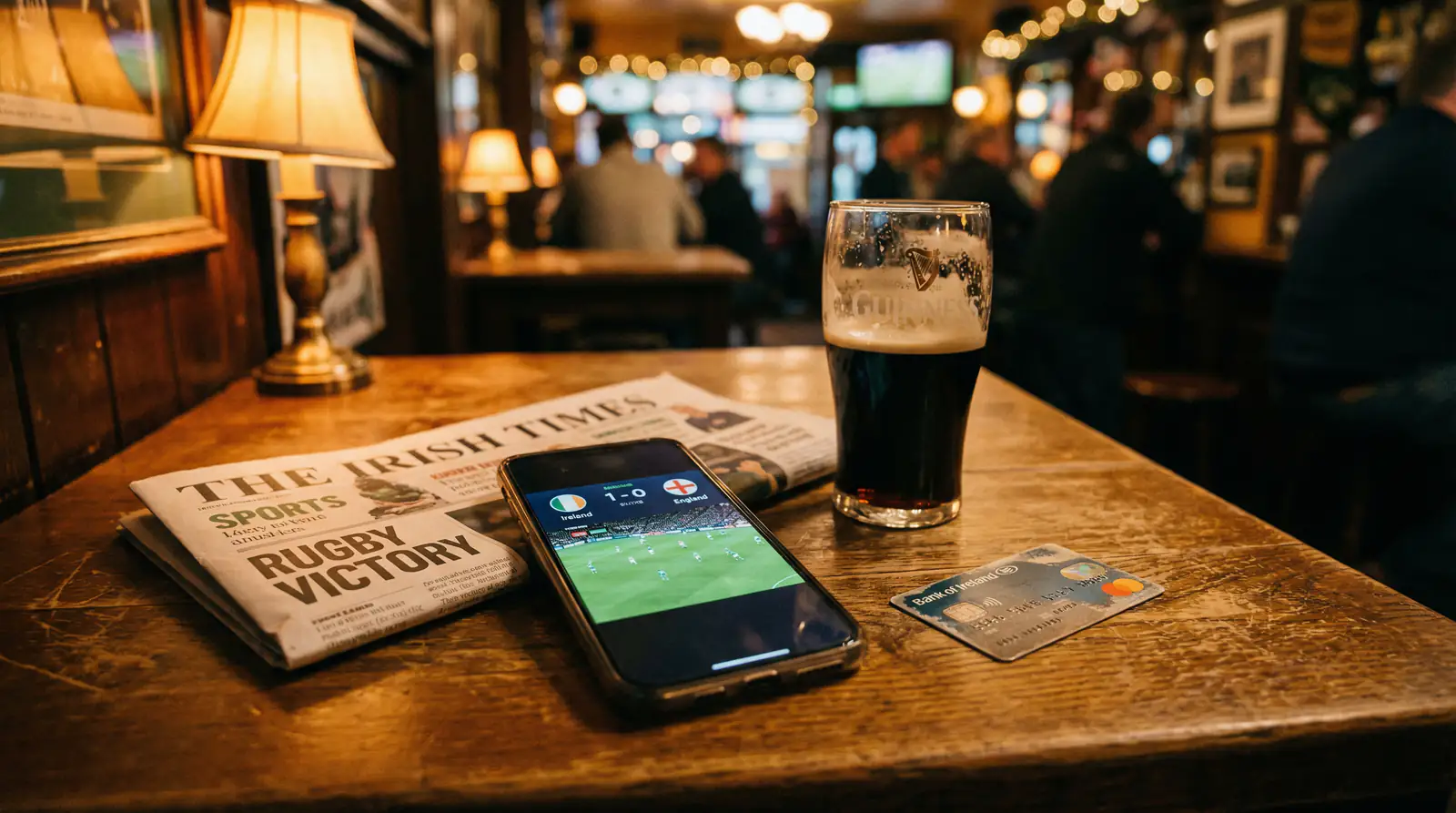
Advertising restrictions represent the other major shift. The Act empowers the GRAI to regulate gambling advertising, and once fully commenced, a broadcast watershed will prohibit gambling ads on television and radio between 5:30am and 9:00pm. Social media advertising is banned by default — operators can only show ads to users who hold an account and actively follow the operator’s channels. For the World Cup specifically, this means the saturated ad environment you might remember from previous tournaments (every ad break featuring a bookmaker offer) will be substantially reduced. Inducements — free bets offered to specific individuals to encourage gambling — are prohibited. Operators can still offer general promotions to the public, but targeted inducements designed to keep you betting or to lure you back after a break are now an offence. The penalty structure is serious: up to five years’ imprisonment and/or fines for non-compliance, and the GRAI can impose penalties of up to EUR 20 million or 10% of turnover.
The tax environment for punters remains unchanged. Ireland does not tax gambling winnings. Your World Cup returns, whether from a EUR 5 acca or a EUR 500 outright, are yours in full. The 2% betting duty is paid by the operator, not the customer, though in practice this cost is baked into the odds you receive. Irish-licensed operators price their markets with that 2% levy factored in, which is one reason why odds from Irish bookmakers occasionally appear marginally less generous than those from offshore operators. The difference is small — typically less than 0.5% on implied probability — and the regulatory protection of using a GRAI-licensed operator outweighs any marginal odds advantage from an unlicensed one.
One practical consideration for the World Cup: the GRAI’s National Gambling Exclusion Register allows individuals to voluntarily exclude themselves from all licensed gambling activities. If you or someone you know needs to set limits, the infrastructure now exists at a national level. Responsible gambling is not a slogan on this site — it is the framework within which everything else operates. Bet within your means, set a tournament bankroll before kick-off, and do not chase losses. The World Cup lasts 39 days. Your financial health lasts a lifetime.
The Playbook in Practice
Nine years of covering international football markets have taught me that World Cup betting rewards structure over instinct. The punters who profit are not the ones with the best gut feelings about which team will click — they are the ones who understand market mechanics, respect bankroll management, and have the patience to wait for the right price at the right time.
The 2026 World Cup betting guide I have laid out here distils that experience into actionable principles. The 48-team format shifts value away from short-priced outright favourites and toward group stage markets, where the extra qualification slots create pricing inefficiencies that informed bettors can exploit. Accumulators should be tight — three legs maximum, diversified across market types, built from group stage fixtures rather than knockout coin flips. Timing matters more than selection: the post-draw window and the pre-squad-announcement period are where the best prices live, not the week before kick-off when casual money floods the market. And the Irish regulatory landscape, reshaped by the Gambling Regulation Act 2024, means you are operating in a more transparent, more protective environment than at any previous World Cup — but you need to adjust your funding methods and understand what has changed.
The tournament kicks off on 11 June. Between now and then, I will be publishing detailed odds verdicts on every contender, group-by-group breakdowns, and specific market analysis across this site. This guide is the foundation. Everything that follows builds on the principles here. Set your bankroll, plan your phases, and approach the biggest World Cup in history with the discipline it demands.
