
MetLife Stadium: World Cup 2026 Final Venue — What to Know
 Available in US
On 19 July 2026, the biggest single sporting event on the planet takes place at a stadium that most European football fans have never heard of. MetLife Stadium in East Rutherford, New Jersey — not technically in New York City, despite what the marketing will tell you — hosts the 2026 World Cup Final at 15:00 local time, which translates to 20:00 IST. I have been inside MetLife for NFL games and international friendlies, and the experience of that venue at full capacity is something that sticks with you. It is enormous, loud and purpose-built for spectacle.
For Irish fans considering the trip or simply trying to understand where the climax of this World Cup takes place, MetLife Stadium deserves a proper look. The venue, the location, the logistics and the match schedule all matter — and the story of how a stadium in suburban New Jersey became the stage for football’s greatest occasion is worth telling.
About MetLife Stadium
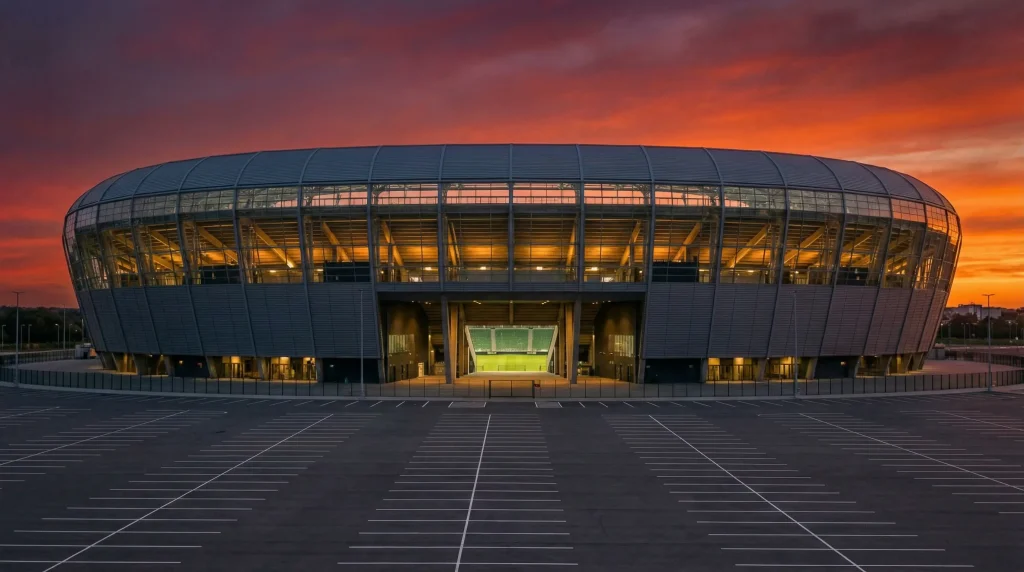
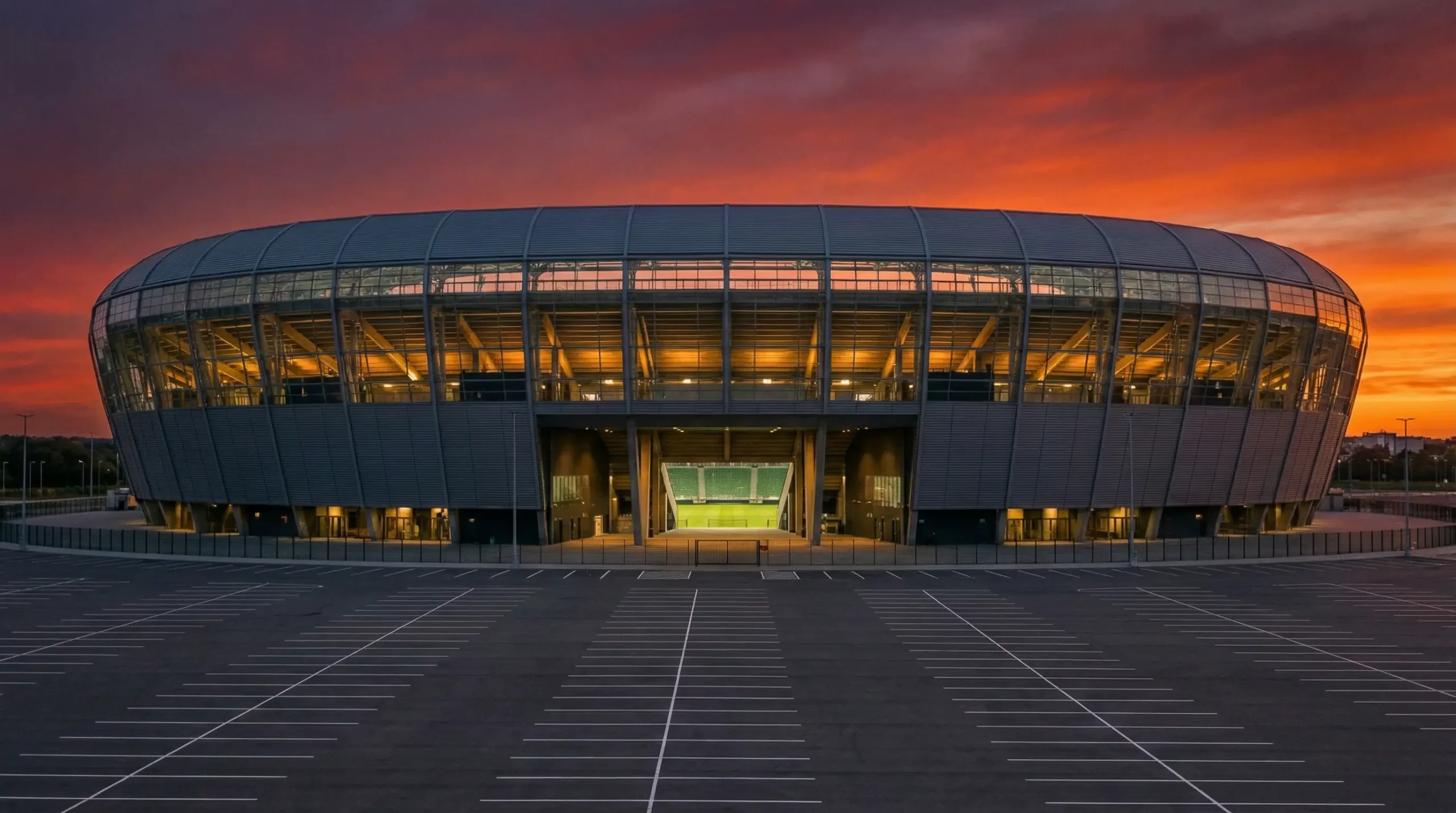
I remember my first visit to MetLife Stadium during an NFL season, walking through the car park — which is genuinely the size of a small Irish town — and thinking: this is what American sports infrastructure looks like at scale. MetLife opened in 2010 as a replacement for the old Giants Stadium on the same site in the Meadowlands Sports Complex. It is the home venue of both the New York Giants and the New York Jets of the NFL, a shared arrangement that is unusual by European standards but common in American football.
The stadium’s capacity for the World Cup Final will be configured at approximately 82,500, making it one of the largest venues at the tournament. The design is an open-air bowl — there is no retractable roof, which means the July weather in northern New Jersey will play a role. Mid-July in the New York metropolitan area typically brings temperatures of 28-33 degrees Celsius with moderate humidity. For a 15:00 local kick-off, the sun will be high and the heat will be a factor, though not as extreme as a Houston or Miami venue in the same period.
MetLife’s construction cost approximately $1.6 billion, making it one of the most expensive stadiums ever built at the time of its completion. The facilities are modern and spacious — wide concourses, extensive catering areas and clear sightlines from every seat. The pitch dimensions will be adjusted for the World Cup to meet FIFA’s field-of-play requirements, with the natural grass surface installed specifically for the tournament replacing the usual artificial turf used for NFL games. That grass conversion is a significant logistical undertaking that FIFA and the local organising committee have been planning for several years.
What MetLife lacks is the kind of iconic visual identity that defines European football cathedrals. It is not the Maracana or Wembley — there is no single architectural feature that immediately says “this is the home of something historic.” It is functional, vast and extremely well-equipped. In American sporting culture, that is the point. The spectacle happens inside, and the infrastructure serves the experience rather than making a statement of its own. For the World Cup Final, the atmosphere inside MetLife will be generated by 82,000 fans from around the world, the occasion itself, and the culmination of 39 days of tournament football. I have no doubt it will rise to the moment.
World Cup 2026 Matches at MetLife
Walking into a stadium and knowing that the World Cup Final will be played on the same pitch in a few weeks’ time adds a weight to every earlier fixture. MetLife Stadium is not just the Final venue — it hosts multiple matches throughout the group stage and knockout rounds, making it one of the busiest venues at the entire tournament.
| Date | Match / Round | Kick-Off (IST) |
|---|---|---|
| 13 June | Group C: Brazil vs Morocco | 23:00 |
| 19 June | Group C: Scotland vs Brazil | 23:00 |
| 28 June | Round of 32 match | TBC |
| 4 July | Round of 16 match | TBC |
| 11 July | Quarter-Final | TBC |
| 15 July | Semi-Final | TBC |
| 19 July | FINAL | 20:00 |
The Group C assignments are significant for Irish viewers: Brazil vs Morocco on 13 June and Scotland vs Brazil on 19 June both take place at MetLife, meaning the stadium hosts two of the most watched group stage fixtures from an Irish perspective. If Scotland reach the Round of 32, there is a chance their knockout match is also assigned to MetLife, though this depends on the bracket structure and FIFA’s venue allocation.
The Final itself kicks off at 15:00 ET, which converts to 20:00 IST — a prime-time evening slot that Irish fans can watch without sacrificing sleep. This is the best possible time slot for European audiences at a tournament hosted in North America. FIFA almost certainly scheduled the Final with European and African broadcasting markets in mind, as the prime-time American slot would be later in the evening. The 20:00 IST kick-off means you can settle into a pub in Dublin, Cork, Galway or Belfast, watch the full 90 minutes (plus extra time and penalties, because World Cup Finals always seem to go the distance), and still catch a last bus home. The scheduling is a gift for Irish viewers, and the atmosphere in pubs across the country on 19 July will reflect that.
From a betting angle, the MetLife factor matters. The venue’s open-air design means weather is a variable — a July thunderstorm in the New York area could transform the Final from a technical contest into a physical battle. The natural grass surface, installed specifically for the World Cup, will play differently from the artificial turf that NFL teams use during their season. Early-tournament matches at MetLife will give us data on how the pitch plays, and I will be watching Brazil vs Morocco on 13 June closely for signs of how the surface affects passing and movement.
For Irish Travelling Fans
Every major tournament produces stories of Irish fans turning foreign cities green, and the 2026 World Cup will be no different — except that this time the destination is New Jersey rather than Gelsenkirchen or Gdansk. I have spoken to Irish fans who are already planning trips to the World Cup Final regardless of who plays, and the logistics are worth understanding before you book.
MetLife Stadium sits in the Meadowlands Sports Complex in East Rutherford, New Jersey, roughly 13 kilometres west of Midtown Manhattan. The stadium is accessible via the NJ Transit rail line from New York Penn Station to the Meadowlands station, a journey of approximately 30 minutes on match days when special services run. Driving is an option if you have a rental car, but the car parks fill early and the post-match traffic congestion is significant — allow 60-90 minutes to exit the Meadowlands area after a major event.
Accommodation in East Rutherford itself is limited and will be heavily booked. Most fans travelling for World Cup matches at MetLife will base themselves in Manhattan, Jersey City or Hoboken and use public transport to reach the stadium. Manhattan hotel prices during the World Cup will be at peak rates — expect to pay EUR 250-400 per night for a mid-range hotel, with budget options in Jersey City or Newark available from around EUR 150 per night. Book early. The World Cup Final week will be the most expensive hotel market in New York’s history.
Flights from Dublin to the New York area are frequent and competitive. Aer Lingus and several other carriers operate daily direct services to JFK and Newark airports, with round-trip fares during the summer of 2026 likely ranging from EUR 500-800 depending on how far in advance you book. Newark Liberty Airport is the closest major airport to MetLife Stadium — roughly 25 minutes by car — while JFK requires a longer transfer into Manhattan and then out to New Jersey. Shannon and Cork also have seasonal transatlantic services worth checking.
The cultural experience of a World Cup in the New York metropolitan area will be unlike anything in European tournament history. Irish pubs in Manhattan — and there are hundreds of them — will serve as gathering points for travelling fans. The Meadowlands area itself is not a walkable urban environment; it is a highway-surrounded sports complex with vast car parks and limited nearby amenities. Plan to eat and drink in Manhattan or Jersey City before heading to the stadium, and bring provisions for the pre-match tailgate atmosphere in the car parks, which is a quintessentially American experience that Irish fans will either love or find bewildering.
New York / East Rutherford: The City Context
A friend who lives in Brooklyn once described MetLife Stadium as “the venue that proves New York will put anything in New Jersey and still call it a New York event.” He is not wrong. MetLife Stadium is in New Jersey, the two NFL teams that play there are called the New York Giants and the New York Jets, and the marketing for the 2026 World Cup Final will describe it as taking place “in New York” regardless of state boundaries. This is one of the enduring absurdities of American sports geography, and Irish fans travelling to the match should understand the distinction.
The New York metropolitan area is the largest urban agglomeration in the United States, with a population of approximately 20 million people across New York, New Jersey and Connecticut. For the World Cup, this means an enormous existing infrastructure of hotels, restaurants, public transport and entertainment — but also massive competition for all of those resources. The World Cup will not be the only major event in the area during July 2026. New York in summer is packed with tourists regardless of football, and the addition of hundreds of thousands of World Cup visitors will stretch the city’s capacity.
For Irish fans, the advantages of a New York-area World Cup Final are significant. The flight is direct and relatively short (around 7.5 hours from Dublin). The time difference (IST minus 5 hours during summer) is manageable. The Irish diaspora in the New York area is one of the largest in the world, meaning you will find familiar faces, familiar pubs and familiar accents everywhere you go. The Woodlawn neighbourhood in the Bronx, the Rockaways in Queens and dozens of establishments in Manhattan’s Midtown and Hell’s Kitchen are traditional Irish strongholds that will serve as natural gathering points during the tournament.
The city context also matters for the football itself. MetLife Stadium sits at the heart of the 2026 World Cup’s geographical spread, with matches taking place across 16 venues from Vancouver to Mexico City. The New York area hosts more matches than any other city at the tournament, which means fans based in Manhattan can attend multiple group stage matches at MetLife without relocating. For those combining the World Cup Final with a broader tournament experience, New York is the most practical base on the east coast.
The weather during the Final on 19 July will be warm — expect 28-32 degrees Celsius with the possibility of afternoon thunderstorms that are common in the New York area during mid-July. The open-air design of MetLife means fans should bring sun protection and hydration, and the playing conditions will favour technically gifted sides who can handle the ball on what could be a dry, fast surface. For the neutral viewer watching from Ireland, the 20:00 IST kick-off means settling in for a summer evening of football with the windows open and a cold drink at hand.
